International Adoption Memoirs
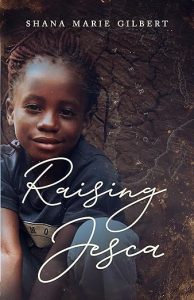
Raising Jesca stands out among International Adoption Memoirs, blending faith, resilience, and the transformative power of love.

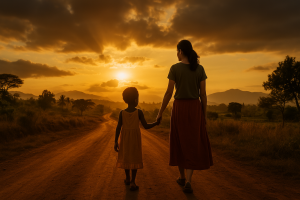
Some books never leave the place they’re written in. They belong to a single town, a single moment, a single culture. But others—memoirs in particular—cross borders long before the reader opens the first page. In the expanding body of International Adoption Memoirs, stories move from villages to cities, from continents to living rooms, carrying with them questions of identity, love, and resilience.
For both writers and readers, these memoirs serve not just as narratives of parenting but as meditations on belonging. They show us how the most personal journeys—adopting a child, building a family—become inescapably global.
At its core, memoir has always been about truth-telling. Unlike autobiography, which often charts a lifetime in linear fashion, memoir zooms in on a specific arc—a crisis, a transformation, a decision that shapes everything afterward. International Adoption Memoirs lean into this tradition, offering stories that are intimate yet far-reaching.
Readers enter them for the human drama: the paperwork, the heartbreak, the waiting, the joy. But they stay for the deeper resonance. These works explore what it means to become a parent across lines of language, culture, and history, often in circumstances marked by trauma and resilience.
For authors, the challenge is balancing personal detail with larger questions. How much of the child’s story belongs in print? How does one avoid sentimentality while still capturing the magnitude of the bond? It is here that the genre demands its greatest discipline—and its greatest compassion.
In a world where global mobility and interconnectedness shape almost every family story, international adoption holds particular weight. According to UNICEF, millions of children worldwide live without permanent families. Adoption is not the only solution—indeed, it is often one of the most complex—but it remains a life-altering path for those who walk it.
Memoirs on this subject do what news reports and statistics cannot: they give us faces, voices, and the slow unfolding of days. They illuminate how love grows in unfamiliar soil, how trust is earned rather than assumed, and how parenthood reshapes not only the adopted child but the adoptive parent.
For readers—especially those considering adoption or already parenting adopted children—these books become guides, warnings, and companions. They remind us that adoption is never simply about “rescue” but about relationship, about the lifelong work of weaving together stories from different worlds.
One of the most compelling features of International Adoption Memoirs is their honesty about difficulty. Authors do not shy away from depicting bureaucratic corruption, extended legal battles, or the raw ache of waiting years for decisions to be finalized. They write about the illnesses that follow children out of orphanages, the cultural misunderstandings that complicate school life, and the identity questions that surface in adolescence.
And yet, hope pulses through these stories. Readers encounter the everyday miracles: a child’s first unguarded smile, the blending of traditions around a family table, the realization that love is less about shared blood than shared persistence. Memoirs like Raising Jesca strike this delicate balance, acknowledging both poverty and resilience, both despair and laughter, both the brokenness of systems and the unbreakable bonds of chosen family.
Many memoirs in this genre weave in themes of faith, though rarely in dogmatic ways. Instead, faith appears as a sustaining force—something that allows adoptive parents to endure setbacks and celebrate triumphs. For some, this means prayer or scripture. For others, resilience itself becomes a kind of spiritual practice: showing up day after day, believing that perseverance will bear fruit.
In Raising Jesca, Shana Marie Gilbert highlights this interplay of faith and grit. She does not romanticize adoption but grounds it in honesty: paperwork delays, illness, bribery, and loss. What sets her account apart is her willingness to acknowledge both divine guidance and personal frailty. It is precisely this blend—faith without sentimentality—that resonates so deeply with readers seeking authenticity.
For authors, the genre demands a voice that is both vulnerable and responsible. These are not fairy tales, and readers distrust anything too polished. Instead, successful memoirists lean into authenticity—admitting mistakes, acknowledging doubts, and showing how philosophy, prayer, or mentorship sustains them through uncertainty.
The best voices are those that treat children not as symbols but as full human beings—complex, resilient, and deserving of privacy even as their stories unfold on the page. Memoirs in this space succeed when they remind us that adoption is not the end of a story but the beginning of a lifelong relationship.
International adoption is not a new phenomenon. After wars in Korea and Vietnam, many children were relocated abroad, often under controversial circumstances. Later, adoptions from Eastern Europe, Africa, and Latin America gained prominence. Each wave reflected global politics as much as family needs.
Memoirs provide a human lens on these histories. They reveal how policies shaped real lives, how cultural misunderstandings left lasting marks, and how the children themselves navigated identity across two worlds. Reading widely across the genre allows authors and readers alike to see patterns—and to consider how adoption stories are inseparable from larger narratives of migration, conflict, and justice.
For writers considering their own International Adoption Memoirs, a few guiding principles emerge:
By following these principles, authors ensure their stories resonate authentically and contribute meaningfully to the genre.
To situate these memoirs within wider conversation, readers may explore adoption perspectives from UNICEF , the Evan B. Donaldson Adoption Institute , and adoption-focused organizations like Holt International . These resources, while not memoirs themselves, deepen the context in which adoption narratives unfold.
International Adoption Memoirs occupy a unique space in literature. They are part travel writing, part parenting guide, part spiritual reflection, and part social critique. Above all, they are human stories—stories that begin in hardship and stretch toward hope.
In the end, what matters most is not the setting—whether Uganda, Indonesia, Colorado, or elsewhere—but the reminder that family can be forged across the deepest divides. Books like Raising Jesca exemplify this truth, showing that while adoption is complex and fraught with challenge, it can also reveal love in its most resilient form.
For authors, these memoirs demonstrate how honesty, humility, and courage can transform personal stories into universal ones. For readers, they are a call to empathy, a reminder that the most powerful journeys are those we take together, even across continents.
Raising Jesca stands out among International Adoption Memoirs, blending faith, resilience, and the transformative power of love.
We work with both traditionally published and “indie” authors who have self or independently published books and our mission is simple. It’s to discover new and talented authors and help them give their work the attention and awareness it deserves. We do this by providing professional and credible reviews which are respected by our readers. Our primary focus is on fiction across all genres, non – fiction with broad appeal and selected poetry.
Why Georgian historical romance endures, exploring emotional consequence, identity, and forgiveness in love stories readers trust.
Explore why emotionally driven dystopian sci-fi novels continue captivating modern readers and writers worldwide.
A deep dive into writing authentic Scottish crime fiction and procedural thrillers grounded in real investigations.
Explore why supernatural crime thrillers with historical noir settings captivate readers through grit, history, and intrigue.
A gripping look at political thrillers about the collapse of American democracy and why they feel so hauntingly real.
Learn how to write YA fantasy where emotions shape power, identity, and character-driven parallel worlds.
Explore English-language crime fiction set in Japan, from Barry Eisler and David Peace to Nicolás Obregón, Michael Pronko and Pete Bond.
A grounded techno thriller blending advanced weapons systems with grief, control, and high-stakes decision-making.
Discover why the best business books reshape thinking, innovation, leadership, and decision-making.
Discover why character-driven epic fantasy and political intrigue keep readers immersed in worlds like The Strains of Malice.


Discover our review of Eric Miltner’s Accretion Book II: Echoes of a Verdant Moon, an ambitious and compelling science fantasy sequel.

Read our review of Silver Wings Falling Down by Yvonne Kays, a moving WWII historical novel of courage, survival, faith and enduring love.
The Everling and the Balefire Monster review: J. Christie returns to Boletare with a dark, inventive YA science fantasy.

Author Publishing Tips American Noir Explained: Crime, Moral Compromise & Ordinary Life Mention the word noir and certain images arrive almost automatically: rain-slicked streets, shadowed
From humble beginnings in 2002 as a book review club BookViral has grown to become the first choice in book reviews for authors around the world and one of the biggest book review sites on the web. BookViral reaches millions of potential readers through best practice SEO and a trusted social media presence ensuring readers get unbiased, critical recommendations they can trust.
BookViral also offers a full suite of author services, including, book editing services for unpublished and self-published authors, website design and bespoke SEO that help authors get discovered by more potential readers as well as industry influencers, such as publishers, agents and film executives.
© Copyright 2019 BookViral Reviews. All Rights Reserved.