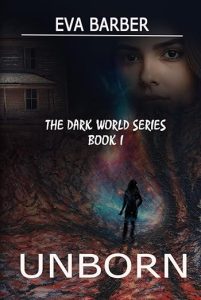
speculative science fiction thriller
A speculative science fiction thriller, Unborn blends mystery, myth, and motherhood in a cosmic fight for survival.


Speculative fiction has always been the literary frontier. It is where imagination collides with possibility, where the future whispers through the cracks of the present, and where science becomes both the engine of storytelling and the mirror reflecting our deepest fears. Among the many branches of this expansive tree, the speculative science fiction thriller stands out as one of the most compelling—and one of the most difficult—for both readers and writers. It’s a subgenre that thrives on tension, mystery, and intellectual wonder, but also demands a grounding in human emotion.
Recently, Eva Barber’s Unborn reminded me why this subgenre is so uniquely magnetic. The novel blends hard science concepts like dark matter with elements of myth, motherhood, and moral dilemmas. Yet it does not read like a laboratory manual dressed up with laser beams. Instead, it captures the pulse of a thriller while never losing sight of its characters’ vulnerabilities. It’s the kind of book that highlights the balancing act at the heart of speculative science fiction thrillers: weaving together cinematic stakes and intimate, human-scale struggles.
What defines a speculative science fiction thriller? In its simplest form, it is fiction that both speculates and accelerates. Like all science fiction, it imagines worlds shaped by technology, cosmology, or future societies. But the thriller element adds urgency: ticking clocks, vanishing allies, and dangers that ripple outward from a personal secret into a planetary or even universal crisis.
Consider how Michael Crichton approached this fusion in Jurassic Park. The speculative conceit—the recreation of dinosaurs through genetic engineering—was fascinating in itself, but what made the book unforgettable was its thriller pacing: predators loose, ethical blind spots exposed, and survival hinging on razor-thin chances. The speculation made the premise, but the thriller made it compulsive. Smithsonian Magazine even notes how the novel influenced real scientific conversations about genetic manipulation.
In this sense, Unborn fits comfortably into the lineage. Olesya’s powers tied to dark matter might sound like pure science fiction, but the story is framed by disappearances, kidnappings, and global conspiracies. Barber speculates on what humanity might discover—and what might destroy us—but she keeps the narrative taut with thriller beats that refuse to let the reader drift too far into abstraction.
One of the hallmarks of the subgenre is its ability to use science not only as backdrop, but as metaphor. Readers come to these books expecting plausibility, even if the plausibility is stretched. That plausibility builds trust, and once trust is established, writers can transform speculative elements into allegories for unseen truths.
In Unborn, dark matter is not just a cosmological puzzle. It is a metaphor for forces that shape our lives invisibly: family bonds, hidden histories, and the weight of destiny. Other novels use similar devices. Liu Cixin’s The Three-Body Problem positions physics as a stage for cultural and political anxieties, while Margaret Atwood’s Oryx and Crake uses genetic engineering as a metaphor for the fragility of ethics in the face of corporate ambition.
For authors, the lesson is clear: research fuels metaphor. Even if readers are not experts in astrophysics or biotechnology, they sense when a speculative framework has been built with care. For readers, this fusion of science and symbol is why the genre is uniquely rewarding—it offers both intellectual stimulation and emotional resonance. Scientific American has even argued that science fiction often pushes real science forward by offering metaphors for problems that have yet to be solved.
If speculative science fiction thrillers are engines of suspense, then they run on a rare fuel: the constant oscillation between intimacy and scale. The challenge for authors lies in keeping readers invested in personal stories while simultaneously unfolding narratives that might span galaxies or civilizations.
In Unborn, Olesya’s relationship with her daughter Emery provides this anchor. No matter how catastrophic the stakes become—vanishing nations, cosmic chambers, or battles over unseen dimensions—the narrative repeatedly returns to the fragile tether between mother and child. Barber resists sentimentality, portraying maternal love as both stabilizing and destabilizing, a choice that grounds the novel’s more ambitious leaps.
This duality echoes across the genre. In Richard K. Morgan’s Altered Carbon, identity and immortality are framed through the lens of a hard-boiled detective mystery. In Blake Crouch’s Dark Matter, questions of quantum possibility unfold within the intimate frame of a man struggling to get back to his family. Both novels are fast-paced, but neither loses sight of the human costs of their speculative premises.
For writers, this means always asking: Who suffers if this technology, discovery, or cosmic event unfolds? Whose heart breaks? Whose fear grips them at 2 a.m.? Without intimacy, spectacle becomes forgettable. With intimacy, spectacle becomes unforgettable.
Another characteristic of the speculative science fiction thriller is its cinematic texture. This doesn’t mean that every novel should read like a Hollywood screenplay, but rather that descriptions should engage the senses in ways that mimic the rhythm of visual storytelling.
Barber’s prose demonstrates this with sharp contrasts. The eerie hush of the Siberian forest where Olesya is discovered is painted in golden light and silence, evoking the stillness of an opening shot. Later, laboratories erupt in chaos, alarms slicing through the air. Still later, hidden chambers are described with ominous dread, their sinister atmospheres heavy enough to press down on the reader.
For readers, this creates immersion. For authors, it’s a reminder that speculative thrillers thrive when the prose keeps pace with the drama. Vivid description should not swamp momentum, but heighten it, giving readers the sense they are not only turning pages but moving through scenes that demand their attention.
The question remains: why do readers keep returning to speculative science fiction thrillers? Perhaps it is because they satisfy two deep human cravings: the desire to know, and the desire to survive.
Speculation feeds curiosity. It allows readers to wonder what lies just beyond the horizon of today’s discoveries. Thrillers feed adrenaline. They put readers on the edge of collapse and then pull them back at the last second. Combined, these cravings make for stories that are both cerebral and visceral, head-turning and heart-stopping.
As one article in Tor.com notes, speculative fiction is defined not only by what it imagines, but by how it makes readers feel. The thriller element supercharges that feeling, ensuring that speculation is never just an intellectual exercise, but a lived experience within the mind of the reader.
For authors hoping to write in this space, there are several guiding principles worth considering:
Ground the impossible in the possible. Even the most far-fetched scenarios need a foundation of plausibility. Research matters.
Keep the science as metaphor, not just mechanism. The speculative conceit should echo themes larger than itself.
Balance scale with intimacy. The bigger the stakes, the more readers need small, human touchstones to care about.
Embrace cinematic storytelling. Thrillers thrive on pacing and sensory immersion.
Leave room for ambiguity. Readers of speculative fiction enjoy questions as much as answers; sometimes what remains unexplained is what lingers longest.
Unborn illustrates many of these principles, and though every author must find their own balance, the lesson is that successful speculative science fiction thrillers are never only about what could happen. They are about what it would mean if it did.
As AI reshapes creativity, as astrophysics pushes deeper into dark matter, and as biotechnology edges closer to rewriting life itself, the speculative science fiction thriller feels more relevant than ever. These novels are not simply escapist entertainment; they are rehearsals for futures we may yet face.
Readers pick them up to be entertained. Authors write them to explore possibility. But both parties leave changed, their imaginations sharpened against the whetstone of “what if.” That is why stories like Unborn resonate—not because they predict the future with precision, but because they prepare us to confront it with empathy, curiosity, and fear in equal measure.
A speculative science fiction thriller, Unborn blends mystery, myth, and motherhood in a cosmic fight for survival.
We work with both traditionally published and “indie” authors who have self or independently published books and our mission is simple. It’s to discover new and talented authors and help them give their work the attention and awareness it deserves. We do this by providing professional and credible reviews which are respected by our readers. Our primary focus is on fiction across all genres, non – fiction with broad appeal and selected poetry.
Explore how beliefs form, evolve, and harden in modern society, blending psychology, culture, and cognition with expert insights.
Explore why dark contemporary poetry and short fiction captivate readers seeking raw truth, healing, and emotional depth.
Explore how middle grade sci-fi adventures turn unlikely young heroes into unforgettable protagonists.
Writing the Speculative Science Fiction Thriller means blending science, suspense, and humanity into unforgettable stories.
A deep dive into writing authentic Scottish crime fiction and procedural thrillers grounded in real investigations.
Author Publishing Tips Thought-Provoking Novels: Why Readers Are Searching for Fiction That Changes the Way They Think Readers Are Searching for More Than Entertainment There
An exploration of modern Christian spirituality, faith and reason, and the return of supernatural belief in a rational age.
A practical guide for readers and writers of historical LGBTQ fiction focused on love, realism, and lasting impact.
Explore psychological thrillers and dark romance with trauma bonding, where suspense and forbidden passion entwine.
A gripping look at political thrillers about the collapse of American democracy and why they feel so hauntingly real.
Explore the best career change books with BookViral Reviews and discover how to navigate your next professional chapter.
An in-depth look at crafting powerful characters in medical thriller fiction through ethics, realism and tension.


Discover our review of Eric Miltner’s Accretion Book II: Echoes of a Verdant Moon, an ambitious and compelling science fantasy sequel.

Read our review of Silver Wings Falling Down by Yvonne Kays, a moving WWII historical novel of courage, survival, faith and enduring love.

Explore English-language crime fiction set in Japan, from Barry Eisler and David Peace to Nicolás Obregón, Michael Pronko and Pete Bond.
The Everling and the Balefire Monster review: J. Christie returns to Boletare with a dark, inventive YA science fantasy.
From humble beginnings in 2002 as a book review club BookViral has grown to become the first choice in book reviews for authors around the world and one of the biggest book review sites on the web. BookViral reaches millions of potential readers through best practice SEO and a trusted social media presence ensuring readers get unbiased, critical recommendations they can trust.
BookViral also offers a full suite of author services, including, book editing services for unpublished and self-published authors, website design and bespoke SEO that help authors get discovered by more potential readers as well as industry influencers, such as publishers, agents and film executives.
© Copyright 2019 BookViral Reviews. All Rights Reserved.