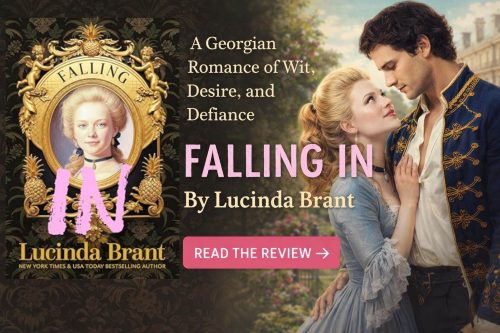
Georgian historical romance continues to hold a powerful place in modern fiction, not because it clings to nostalgia, but because it understands emotional consequence. Set within a society governed by etiquette, reputation, and rigid class divisions, these novels explore love under pressure—where desire must be measured, choices carry weight, and happiness is never assumed.
For readers, Georgian romance offers immersion without escapism’s emptiness. For writers, it provides one of the richest emotional frameworks in literary history. Stories unfold slowly, deliberately, shaped as much by what cannot be said as by what eventually is.
The Emotional Power of Constraint in Georgian Romance
Unlike contemporary romance, Georgian-era love stories operate within narrow boundaries. Courtship is public. Reputation is fragile. Women, in particular, navigate a world where a single misstep can alter their future irrevocably. This constraint sharpens emotional tension rather than dulling it.
In novels like Falling IN, attraction is not immediate gratification but an unfolding awareness. Glances replace declarations. Conversations carry subtext. Silence becomes meaningful. This restraint is what makes the eventual emotional resolution so satisfying for readers seeking depth rather than speed.
From a craft perspective, this approach aligns with what literary historians describe as “moral realism,” a concept explored in period fiction archives such as the British Library’s Georgian Britain collection, where social context and emotional behaviour are inseparable.
Strong Heroines Without Anachronism
One of the defining appeals of modern Georgian historical romance is the rise of the quietly strong heroine. These women do not reject their era; they navigate it with intelligence, resilience, and moral clarity.
Rather than imposing modern attitudes onto historical settings, authors allow strength to emerge through self-knowledge, observational wit, and emotional honesty. In Falling IN, the heroine’s power lies not in rebellion for its own sake, but in her refusal to diminish herself to meet expectation.
Readers respond to this authenticity because it feels earned. These characters do not escape their world; they negotiate it. That distinction is crucial, and it reflects a broader trend in historical fiction discussed by literary commentators at Jane Austen’s House, where constraint is treated as narrative opportunity rather than limitation.
Reframing the Georgian Romantic Hero
Equally important is the evolution of the Georgian romantic hero. No longer defined solely by charm or dominance, he is increasingly shaped by accountability, emotional growth, and ethical tension.
Military service, inheritance, and public reputation often weigh heavily on these characters. In Falling IN, the hero’s journey is not about conquest, but recognition—of responsibility, vulnerability, and the emotional cost of recklessness. This shift reflects changing reader expectations and is frequently discussed within romance craft communities such as Romance Writers of America.
For writers, this allows masculinity to be explored with nuance rather than cliché, deepening both character and theme.
Setting as Narrative Force, Not Decoration
In effective Georgian romance, setting is never ornamental. Ballrooms, studios, gardens, and drawing rooms function as emotional pressure chambers. Privacy is rare. Observation is constant. Every location carries social meaning.
This is one reason readers remain so immersed. The environment actively shapes emotional possibility. A conversation overheard can alter a life. A moment alone can feel dangerously intimate. Writers who understand this transform setting into narrative force rather than background.
Such use of place reflects historical reality and enhances emotional credibility, a technique frequently highlighted in historical fiction analysis by The Guardian’s book features.
Why Readers Still Seek Happy Endings in Historical Romance
Despite high emotional stakes, readers of Georgian romance overwhelmingly value the promise of a happy ending—not as fantasy, but as emotional justice. Happiness feels earned precisely because the obstacles are real.
Falling IN delivers this satisfaction without sacrificing realism. The resolution honours both character growth and social consequence, reinforcing why the “happy ending” remains central to the genre’s appeal.
Publishing trend analyses from Publishers Weekly consistently show that historical romance readers prioritise emotional payoff grounded in credible character development rather than shock or subversion.
What Georgian Romance Offers Writers Today
For authors, Georgian historical romance offers something increasingly rare: permission to slow down. To trust subtext. To build intimacy through character rather than plot acceleration.
Success in this genre depends on immersion, research, and empathy. Writers who respect the era’s limitations while exploring its emotional richness find an audience that values patience and depth.
Falling IN stands as a reminder that romance does not need spectacle to resonate. It needs truth, restraint, and emotional integrity.
A Genre That Continues to Evolve
Georgian historical romance remains vibrant because it continues to evolve without losing its core values. As readers seek stories that reward emotional intelligence and moral courage, the genre offers a timeless framework for exploring love under pressure.
Whether approached as a reader seeking immersion or a writer refining craft, these stories continue to matter—not loudly, but lastingly. And that is why novels like Falling IN endure: they trust the reader, honour the past, and believe that happiness, when earned, is worth waiting for.
Why Georgian Romance Performs So Well in the Age of AI Search and Reader Intent
One of the less discussed reasons Georgian historical romance continues to thrive is its clarity of reader intent. In an era increasingly shaped by generative search and AI-driven recommendation systems, stories that signal tone, emotional outcome, and genre confidence perform better than those built on ambiguity alone.
Readers searching for historical romance are rarely browsing at random. They are looking for specific emotional experiences: slow-burn attraction, moral tension, earned intimacy, and narrative closure. Georgian romance satisfies these queries with precision. Its conventions are not restrictive—they are communicative. They tell both human readers and algorithmic systems exactly what kind of emotional journey is being offered.
For authors, this matters. Search engines increasingly privilege content that aligns clearly with user expectation while still offering originality. Georgian romance excels here because it blends recognisable genre markers with endless variation in character psychology, setting, and theme. A reader searching for “historical romance with strong heroine” or “Georgian romance with happy ending” is not asking for novelty in structure, but depth in execution.
This is also why long-form editorial writing about the genre continues to perform well. Articles that explore why these stories resonate—rather than merely summarising plots—serve both discovery and authority. They speak to readers seeking validation of taste and to writers refining craft.
Importantly, Georgian romance also resists the disposable nature of trend-driven fiction. These novels are reread, recommended, and discussed over time, building long-tail discoverability rather than short-term spikes. In publishing terms, they are evergreen.
For writers working in the genre, this offers reassurance. Careful research, emotional restraint, and character-led storytelling are not being eclipsed by faster or louder forms of fiction. They are being rewarded—by readers, by search behaviour, and by sustained engagement.
In a literary landscape increasingly shaped by speed, Georgian historical romance remains a space where patience is not only permitted, but prized.