why coming-of-age fantasy endures
Discover why coming-of-age fantasy endures, blending epic worlds with timeless journeys of growth, magic, and destiny.

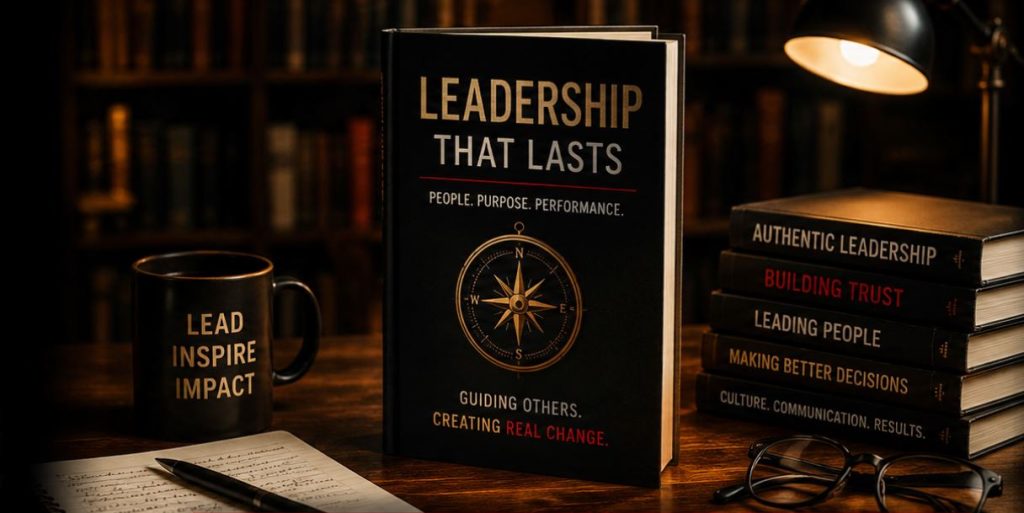
Every year, a fresh wave of business books arrives with a familiar promise: sharper strategy, stronger teams, better decisions, bigger results. Yet the books that endure in the leadership category are rarely the ones with the loudest frameworks or the most polished jargon. The best leadership books are the ones readers return to, recommend to colleagues, and underline because they speak to the reality of leading people rather than the fantasy of controlling them.
That matters more now than it once did. Recent workplace reporting based on Gallup data shows employee engagement fell globally in 2024, manager engagement dropped from 30% to 27%, and only 44% of managers had received formal management training. At the same time, Gallup’s findings have been widely cited as showing that managers account for around 70% of the variance in team engagement. In other words, readers are not buying leadership books out of idle curiosity. They are buying them because modern management is difficult, high-pressure, and often under-supported.
If you are an author wondering how to write a leadership book that actually connects with readers, that is the starting point. People do not go searching for the best leadership books because they want more abstract theory. They search because they need help with the conversations, pressures and decisions waiting for them on Monday morning.
One of the most common mistakes in leadership publishing is assuming that more information automatically creates more value. It does not. Managers today are already surrounded by information: LinkedIn commentary, podcasts, keynote clips, newsletters, white papers, webinars and AI-generated summaries. What they lack is not exposure to leadership language. What they lack is trustworthy guidance that helps them act well in uncertain situations.
That is why the most effective leadership books tend to revolve around urgently practical questions. How do I earn trust when a team is exhausted? How do I lead through change without sounding theatrical? How do I have difficult conversations without damaging morale? How do I create accountability without fear? Those are the questions readers carry into search engines, and they are the questions that make books feel useful rather than merely intelligent.
For authors, this changes everything. A strong leadership book should not begin with what the writer wants to explain. It should begin with what the reader is struggling to solve. That simple shift is often the difference between a book that sounds impressive and one that becomes indispensable.
Credentials remain helpful. Seniority, experience and domain knowledge still open the door. But they no longer guarantee that readers will stay with you. Increasingly, audiences want leadership authors who sound credible and human at the same time. They want to know not only what worked, but what failed, what changed, what cost something, and what the author learned the hard way.
That expectation is not accidental. In the workplace itself, employees increasingly judge leadership through the lens of trust and authenticity. A GE-Ipsos poll reported a clear gap between how senior leaders rate their communication and how junior employees experience it, with many younger employees feeling chief executives do not always “walk the walk”. When readers open a leadership book, they bring that scepticism with them. They have little appetite for performance. They respond more strongly to candour.
This is one reason some leadership books feel instantly dated while others travel well. Books that present leadership as a flawless ascent often read like brand management. Books that acknowledge uncertainty, contradiction and growth tend to earn trust more quickly. For authors writing in the genre, vulnerability is not a stylistic extra. It is often central to credibility.
Ask people why they recommend a business book years after reading it, and they seldom begin with a matrix. They begin with a scene. A confrontation. A failure. A turning point. A moment where a leader got something wrong and learned from it. That instinct is supported by communication research. Work on narrative transportation and meta-analyses of narrative persuasion suggest that stories can shape beliefs, attitudes, intentions and behaviour in ways abstract exposition often cannot, because readers become mentally and emotionally involved in what they are reading. Research into narrative persuasion has consistently shown that stories influence beliefs and decision-making more effectively than abstract information alone. Read the overview published by the Annual Review of Psychology:
For leadership authors, that has an obvious implication. Frameworks are useful, but frameworks alone are rarely memorable. Story gives the reader friction, context and consequence. It lets them see what an idea looks like under pressure. It turns “communicate with empathy” from a slogan into a lived example involving timing, tone, resistance and risk.
The strongest leadership books understand this balance. They do not abandon structure, but they refuse to hide inside it. They use story to carry insight. They show the awkward meeting, the hard-earned apology, the flawed judgment, the recovery. Readers remember those moments because they can imagine themselves inside them.
Another reason some books outperform others is that the leadership category itself has changed. Readers still want books about performance, decision-making and organisational success. But they increasingly expect those themes to be discussed alongside emotional intelligence, psychological safety, wellbeing, belonging and culture. The modern workplace has made people questions impossible to treat as soft or secondary.
Research and reporting both reinforce that shift. Systematic reviews and empirical studies continue to link psychological safety with learning, innovation and team performance. More recent work in workplace settings also suggests that shared narrative and story-based reflection can support empathy, connection and self-reflection among colleagues. Meanwhile, the broader management conversation has been shaped by concerns over burnout, disengagement and the strain placed on managers trying to lead through hybrid work, restructuring and technological change.
That is why books centred on humanity now feel more contemporary than books obsessed purely with control. A good recent example is Leading While Human, which BookViral reviewed as a leadership title that tackles imposter syndrome, burnout, workplace culture, redundancy, mental health and psychological safety through personal reflection rather than corporate performance. The review also notes that its appeal lies in practical wisdom grounded in lived experience, not in elaborate management formulas.
For authors wondering what today’s readers expect from leadership books, that is an important clue. The market has not grown tired of leadership. It has grown tired of leadership presented as if people are the least interesting part of the story.
There is also a simpler, more practical truth: most leadership readers are busy. Many are managing teams, budgets, targets and uncertainty at the same time. That reality affects how they read. Books overloaded with abstract language, recycled buzzwords and over-engineered acronyms create distance just when readers most need clarity.
Recent reporting on the state of management repeatedly returns to the same basics: clear expectations, regular conversations, coaching, support and trust. These are not glamorous ideas, but they are the habits that appear again and again in discussions of effective management. Authors who write plainly enough for readers to apply an idea immediately are not “dumbing down” the subject. They are respecting the context in which leadership actually happens.
This is where many aspiring business books lose momentum. Their arguments may be sound, but the prose feels like a slide deck. The best leadership books understand that readability is part of usefulness. They make complex thought feel graspable. They leave space for reflection. And they know that simplicity, when backed by experience, reads as confidence rather than compromise.
A leadership book becomes genuinely influential when it does more than deliver content. It gives readers language for conversations they need to have with colleagues, teams and themselves. That is what keeps a book alive after the final chapter. It moves from private reading to shared reference point. It becomes the title someone mentions in a one-to-one, a workshop, a board meeting or a team discussion because it helped them frame something difficult more clearly.
That quality is often underestimated by authors chasing authority. Readers do not usually recommend a leadership book because it proved the author was clever. They recommend it because it helped them think better, speak better, or lead better. In practical terms, that means strong leadership books tend to do three things at once: they solve a real problem, they sound unmistakably human, and they leave the reader with insight sturdy enough to survive outside the book.
If you are writing in this genre, those are the questions worth asking before publication. What pressure is this book helping the reader navigate? Where is the reader likely to see themselves in the material? Which stories will make the argument stick? Which chapters earn trust rather than merely request it? And when the book is finished, what conversation will it start inside a real workplace?
For BookViral, this is exactly why certain titles rise above the crowd. The strongest leadership books are rarely the ones trying hardest to sound important. They are the ones that feel observant, grounded and usable. They recognise that leadership is not just about results, but about judgment, trust, resilience, communication and the emotional reality of responsibility.
For authors, that offers a clear answer to the question behind so many search queries: how do you write a leadership book readers will actually finish? You write one that helps more than it performs. You write one that respects the reader’s pressures. You replace posture with honesty, jargon with clarity, and empty certainty with insight earned through experience. For a broader look at why trust, communication and people-centred leadership remain essential management skills, the Harvard Business Review continues to publish extensive research and practical leadership insights
That is also why Leading While Human works as an example of the genre done well. As BookViral’s review suggests, its strength lies not in pretending leadership is tidy, but in recognising that the most useful books are often those willing to meet readers in the difficult, complicated and unmistakably human parts of the job.
In a crowded market, that is what makes a leadership book memorable. Not the loudest promise, but the clearest understanding of what leadership actually feels like when real people are involved.



Discover why coming-of-age fantasy endures, blending epic worlds with timeless journeys of growth, magic, and destiny.
Discover why STEM books for children, especially space books, continue to inspire curiosity, improve discoverability and encourage lifelong reading.
Explore why metaphysical environmental fiction is resonating with readers, blending destiny, emotion, and planetary healing.
An editorial exploration of psychological noir crime fiction, voice-driven storytelling, and why character still matters.
A magical academy adventure where alliances, kingdoms, and rising darkness test one young hero’s courage.
Pandemic fiction now feels real. Explore how science, misinformation, and moral failure shape post-COVID storytelling.
A thoughtful exploration of quiet Georgian romance, emotional depth, and why character-driven historical love stories endure.
Learn how to write YA fantasy where emotions shape power, identity, and character-driven parallel worlds.
Discover why military techno-thrillers captivate readers with AI, suspense, hidden secrets, and realistic stakes.
Discover what makes leadership books succeed, why readers recommend them, and how authors create lasting impact.


Discover our review of Eric Miltner’s Accretion Book II: Echoes of a Verdant Moon, an ambitious and compelling science fantasy sequel.
Read our review of Silver Wings Falling Down by Yvonne Kays, a moving WWII historical novel of courage, survival, faith and enduring love.

Explore English-language crime fiction set in Japan, from Barry Eisler and David Peace to Nicolás Obregón, Michael Pronko and Pete Bond.
The Everling and the Balefire Monster review: J. Christie returns to Boletare with a dark, inventive YA science fantasy.
From humble beginnings in 2002 as a book review club BookViral has grown to become the first choice in book reviews for authors around the world and one of the biggest book review sites on the web. BookViral reaches millions of potential readers through best practice SEO and a trusted social media presence ensuring readers get unbiased, critical recommendations they can trust.
BookViral also offers a full suite of author services, including, book editing services for unpublished and self-published authors, website design and bespoke SEO that help authors get discovered by more potential readers as well as industry influencers, such as publishers, agents and film executives.
© Copyright 2019 BookViral Reviews. All Rights Reserved.