Why Readers Are Drawn to Novels on Scientific Discovery and Faith
Explore why readers love novels addressing the coexistence of science and faith, blending deep themes, rich narratives, and profound philosophical inquiries


There was a time when readers primarily searched for stories that entertained. They wanted a compelling mystery, an unforgettable romance or an epic adventure capable of carrying them away from everyday life for a few hours. Those motivations still exist, but they are no longer the whole story. Increasingly, readers are searching for books that offer something more difficult to define. They want novels that linger in the mind after the final chapter, challenge long-held assumptions or encourage them to see familiar ideas from an entirely different perspective.
This shift has quietly created one of the most interesting opportunities in contemporary publishing. While bestselling charts remain dominated by established genres, search behaviour tells a more nuanced story. Readers are asking questions that reveal a growing appetite for fiction with intellectual and emotional depth. Rather than searching for “science fiction” or “fantasy” alone, they are typing phrases such as thought-provoking novels, books that make you think differently, books about the meaning of life, and novels that stay with you after you finish them. These are not simply genre searches. They reflect a desire for stories that become experiences rather than distractions.
For authors, this change raises an equally important question. If readers are actively looking for books that explore consciousness, identity, purpose and human connection, why do so many thoughtful novels struggle to reach them?
The answer lies partly in discoverability. The publishing industry has become remarkably efficient at categorising books, yet categorisation is not always how readers discover their next novel. Retail algorithms rely heavily on metadata, sales history and familiar classifications. Readers, however, often search emotionally. They are not always looking for a genre; they are looking for a feeling or an idea.
That distinction matters.
A reader who has just finished The Midnight Library may not immediately search for another work of speculative fiction. Instead, they may search for books about second chances, novels that restore hope, or stories that change your perspective on life. Likewise, someone who admires Paulo Coelho or Richard Bach may never type “visionary fiction” into a search engine, despite repeatedly choosing books that comfortably belong within that tradition.
Publishing terminology and reader behaviour frequently speak different languages.
Research into online search behaviour consistently demonstrates that people increasingly frame searches around problems, aspirations and experiences rather than products alone. Google’s own guidance on understanding search intent highlights that users are often seeking answers to broader questions rather than simply looking for specific titles or categories. This subtle change has reshaped discoverability across every creative industry, including books.
Visionary and metaphysical fiction occupy an unusual position within this landscape. The readership is loyal, intellectually curious and often highly engaged, yet the genre itself remains surprisingly invisible compared with more commercial categories. Many readers consume visionary fiction without ever describing it that way. They recognise authors, themes and emotional experiences rather than industry labels.
This shift also explains why discoverability has become more complex than simply choosing the right category on a retailer’s website. Books that explore philosophy, spirituality or human consciousness often appeal to readers across multiple genres. One reader may approach them through speculative fiction, another through literary fiction, while someone else is searching for books about purpose or personal transformation. The book itself has not changed, but the routes readers take to find it are remarkably diverse.
For independent authors, this presents both a challenge and an opportunity. Competing for broad terms such as science fiction novels or best books of the year is increasingly difficult, yet more specific searches reveal readers with a far clearer idea of what they want. Someone searching for thought-provoking novels about human connection or books that make you question reality is already looking for a particular reading experience. Matching that intent is often more valuable than chasing higher-volume keywords with far greater competition.
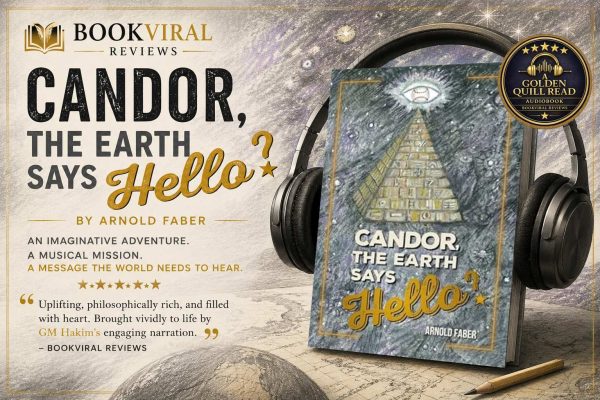
Arnold Faber’s Candor, The Earth Says Hello? illustrates this dynamic well. Rather than sitting comfortably within a single commercial category, it combines speculative fiction, philosophy, coming-of-age storytelling and music into a narrative that speaks to readers looking for ideas as much as plot. Its ideal audience is unlikely to be defined by genre alone, but by curiosity about the questions the novel explores.
The broader question therefore becomes less about individual books and more about how meaningful fiction finds its audience in an increasingly crowded marketplace.
Discoverability Begins with Search Intent
The challenge is compounded by the way books are marketed. Publishing has traditionally relied upon comparison. A novel is presented as being “for fans of” another author or compared with a familiar bestseller because comparison reduces uncertainty. It gives readers a mental shortcut. There is nothing inherently wrong with that approach, but it has limitations when applied to books that deliberately resist simple classification.
Many of the novels readers later describe as life-changing were not immediate commercial successes precisely because they occupied territory between established genres. Richard Bach’s Jonathan Livingston Seagull, Daniel Quinn’s Ishmael, and The Celestine Prophecy all gained momentum because readers recommended them to one another rather than because they fitted neatly into existing publishing categories. Their success emerged from conversations rather than classifications.
That pattern continues today. According to research from the Codex Group, personal recommendations remain one of the strongest influences on book purchasing decisions, particularly for literary and idea-driven fiction. Readers are far more willing to invest their time in an unfamiliar novel when someone they trust explains not simply what the book is about, but how it made them feel or what questions it left them asking. https://www.codexgroup.com/research/
How Readers Really Discover Meaningful Fiction
This changing pattern of search behaviour reflects a broader shift in how books are discovered. Increasingly, readers begin with a question rather than a title. They search for novels that explore grief, consciousness, hope or identity because they are looking for ideas that resonate with their own lives. The eventual book choice often comes later.
For independent authors, this changes the discoverability equation. Success is less about fitting neatly into a traditional category and more about understanding the language readers naturally use when searching online. Books that answer genuine curiosity have an opportunity to build visibility steadily over time because they continue to appear whenever those questions are asked.
The publishing industry has recognised this change. Nielsen BookData’s reporting on book discovery has repeatedly shown that readers are increasingly influenced by online recommendations, thematic searches and digital browsing rather than simply walking into a bookshop with a title already in mind. As discoverability becomes more fragmented, books with clear thematic identities often outperform those marketed solely through genre labels because they align more closely with how readers actually search for their next read. https://nielsenbook.co.uk/
Viewed through that lens, Arnold Faber’s Candor, The Earth Says Hello? is representative of a growing class of novels that reward reflection rather than instant gratification. They invite readers into conversations about humanity, possibility and meaning rather than offering easy answers. As interest in thoughtful fiction continues to grow, books that combine compelling storytelling with enduring ideas are likely to become increasingly discoverable, not because they fit neatly into a category, but because they answer the questions readers are already asking.
Do Readers Really Want Thought-Provoking Fiction?
One objection is often raised whenever discussions turn to thoughtful or metaphysical fiction. Critics argue that readers ultimately want entertainment, not philosophy. It is certainly true that novels burdened by ideas at the expense of story rarely find a lasting audience. Fiction succeeds because it creates emotional investment before it asks readers to consider larger questions. Ideas alone are seldom enough.
The most enduring novels understand this balance. They never feel like essays disguised as fiction. Instead, they allow readers to arrive at their own conclusions through character, conflict and narrative. Harper Lee did not write a legal textbook, George Orwell did not write a political manifesto, and Yann Martel’s Life of Pi continues to provoke discussion precisely because it refuses to tell readers what they should believe. The ideas emerge naturally from the story rather than interrupting it.
That distinction explains why the demand for thought-provoking fiction continues to grow despite constant predictions that readers have shorter attention spans than ever before. Digital media may encourage rapid consumption, but it has also increased the value of experiences that feel meaningful. Readers increasingly talk about books that stay with them, prompt discussion or encourage them to revisit familiar questions from a different perspective. These are qualities that generate long-term readership because they encourage recommendation, re-reading and conversation.
Why Books That Ask Big Questions Have Staying Power
Publishing data supports this observation. The Audio Publishers Association has reported sustained growth in audiobook listening alongside increasing interest in narrative non-fiction and literary fiction, suggesting readers are investing time in works that offer more than simple escapism. At the same time, surveys conducted by organisations such as the National Endowment for the Arts continue to demonstrate that regular readers value books for their ability to broaden understanding and develop empathy as much as for entertainment alone. These findings point towards an audience that is not abandoning reflective fiction but actively seeking it in new formats and through new discovery channels.
For authors, this changes the challenge from writing an unusual book to ensuring the right readers can find it. Success no longer depends solely upon fitting comfortably within a recognised shelf in a bookshop. Increasingly, it depends upon understanding the questions readers are already asking before they know which book will answer them. A novel exploring hope, consciousness or the search for purpose may resonate with readers of speculative fiction, literary fiction and contemporary fiction simultaneously, provided its themes are discoverable through the language those readers naturally use.
This is also where patience becomes an overlooked virtue in independent publishing. Books built around enduring ideas often enjoy a longer commercial life than those driven primarily by trends. They may not generate explosive early sales, but they accumulate readers gradually through recommendations, reviews, book clubs and online searches that remain relevant for years rather than weeks. Discoverability becomes cumulative rather than immediate, with each new reader increasing the likelihood that another will find the book.
Arnold Faber’s Candor, The Earth Says Hello? reflects this quieter path to readership. Its combination of speculative storytelling, music and philosophical reflection places it within a growing body of fiction that appeals to readers searching for meaning as much as momentum. Those readers may arrive through very different search terms, but they are united by a common expectation: they want a novel that leaves them thinking long after the story ends.
The Search for Meaning Is Reshaping Book Discovery
Ultimately, the growing popularity of searches for thought-provoking novels says as much about readers as it does about publishing. In an age of endless information, people are increasingly looking for stories that help them interpret the world rather than simply escape from it. They are searching for books that illuminate, challenge and inspire without pretending to offer simple answers. Authors who understand that shift are better placed to reach the audiences already looking for exactly what they have written, while readers benefit from discovering novels that continue to resonate long after the final page has been turned.



Explore why readers love novels addressing the coexistence of science and faith, blending deep themes, rich narratives, and profound philosophical inquiries
In our latest blog we explore Celebrating Black Women: Their Stories in Historical Fiction and why their inclusion is crucial for reflecting true history…
Discover the art of biographical fiction, where history meets imagination. Learn tips for crafting compelling narratives and explore the allure of bringing historical figures to life through storytelling. Ideal for authors and readers of biographical fiction.
Discover the delightful tale of ‘Stanley the Pencil’ by J.L. Manning, an illustrated children’s book filled with adventure, exploration, and vibrant characters. Follow Stanley’s journey beyond his pencil case, encouraging young readers to embrace curiosity and learning
Explore the profound impact of Christian fiction on faith and beliefs. Learn how stories of redemption, hope, and spiritual journeys inspire readers and deepen their connection to their faith. Discover the transformative power of compelling narratives in shaping personal and communal beliefs
Explore how family bonds add emotional depth, cultural authenticity, and thematic richness to narratives. Learn how themes of honour, legacy, and intergenerational dynamics shape compelling stories that resonate across time


Discover our review of Eric Miltner’s Accretion Book II: Echoes of a Verdant Moon, an ambitious and compelling science fantasy sequel.

Read our review of Silver Wings Falling Down by Yvonne Kays, a moving WWII historical novel of courage, survival, faith and enduring love.

Explore English-language crime fiction set in Japan, from Barry Eisler and David Peace to Nicolás Obregón, Michael Pronko and Pete Bond.
The Everling and the Balefire Monster review: J. Christie returns to Boletare with a dark, inventive YA science fantasy.
From humble beginnings in 2002 as a book review club BookViral has grown to become the first choice in book reviews for authors around the world and one of the biggest book review sites on the web. BookViral reaches millions of potential readers through best practice SEO and a trusted social media presence ensuring readers get unbiased, critical recommendations they can trust.
BookViral also offers a full suite of author services, including, book editing services for unpublished and self-published authors, website design and bespoke SEO that help authors get discovered by more potential readers as well as industry influencers, such as publishers, agents and film executives.
© Copyright 2019 BookViral Reviews. All Rights Reserved.
